
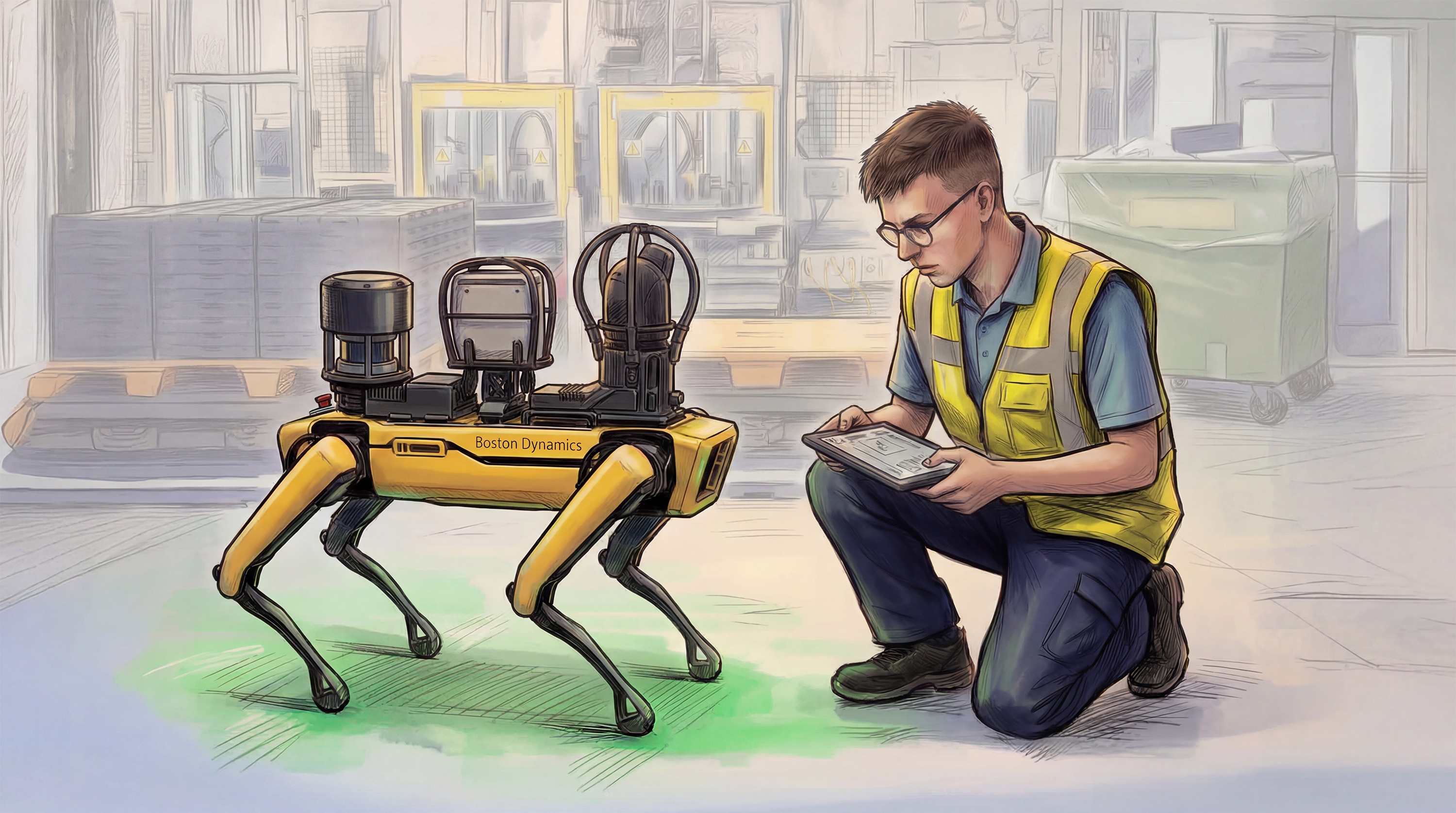
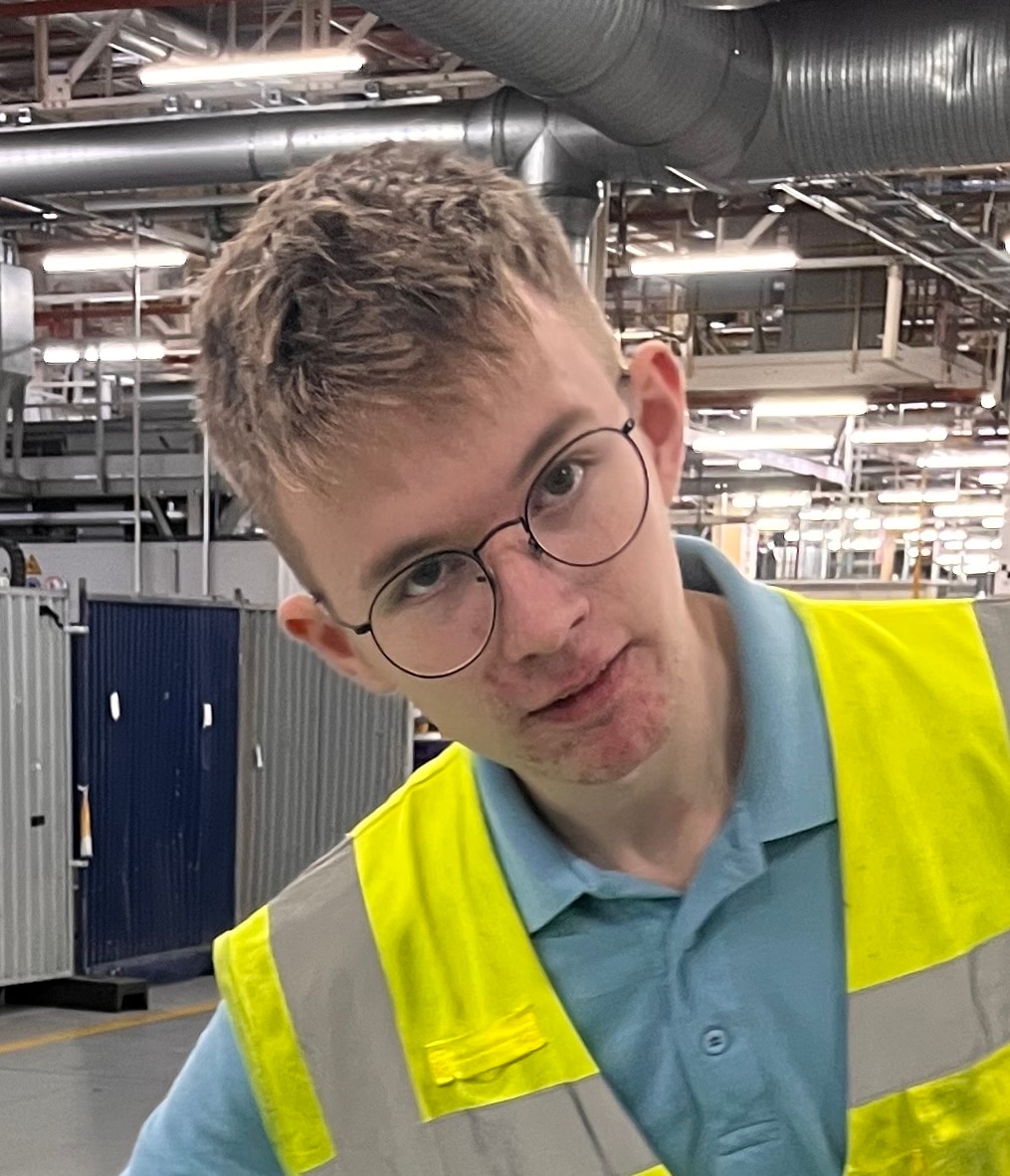
Five years ago, I was still at school studying design engineering. If you’d told me then that I’d be working as an apprentice at Ford today and one of my main roles was to be a robot dog handler, I’d have thought you were joking. Technology has certainly moved on a lot in those five years, though.
When Boston Dynamics’ Spot®, the robot dog, was first introduced to the Halewood Plant here in Liverpool, I guess I got a bit lucky. During my last years at school, I worked for a company that was using one of these quadrupeds in orchards to detect the ripeness of apples.
I was no expert, but the fact I’d had some experience meant I was given the responsibility and sent on a training course. Considering I’d only just started work at the plant, this was an amazing opportunity.
How the robot dog works
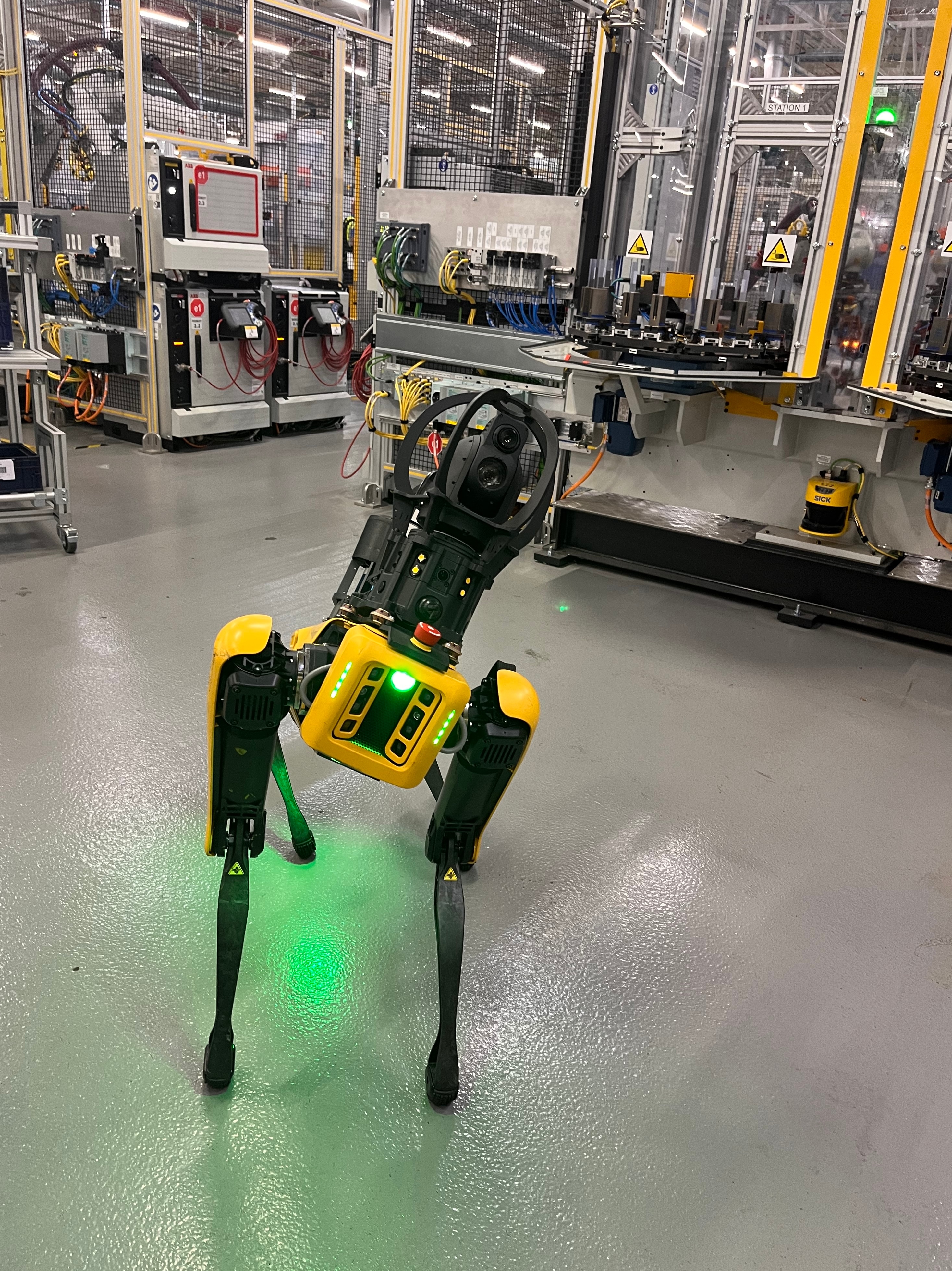
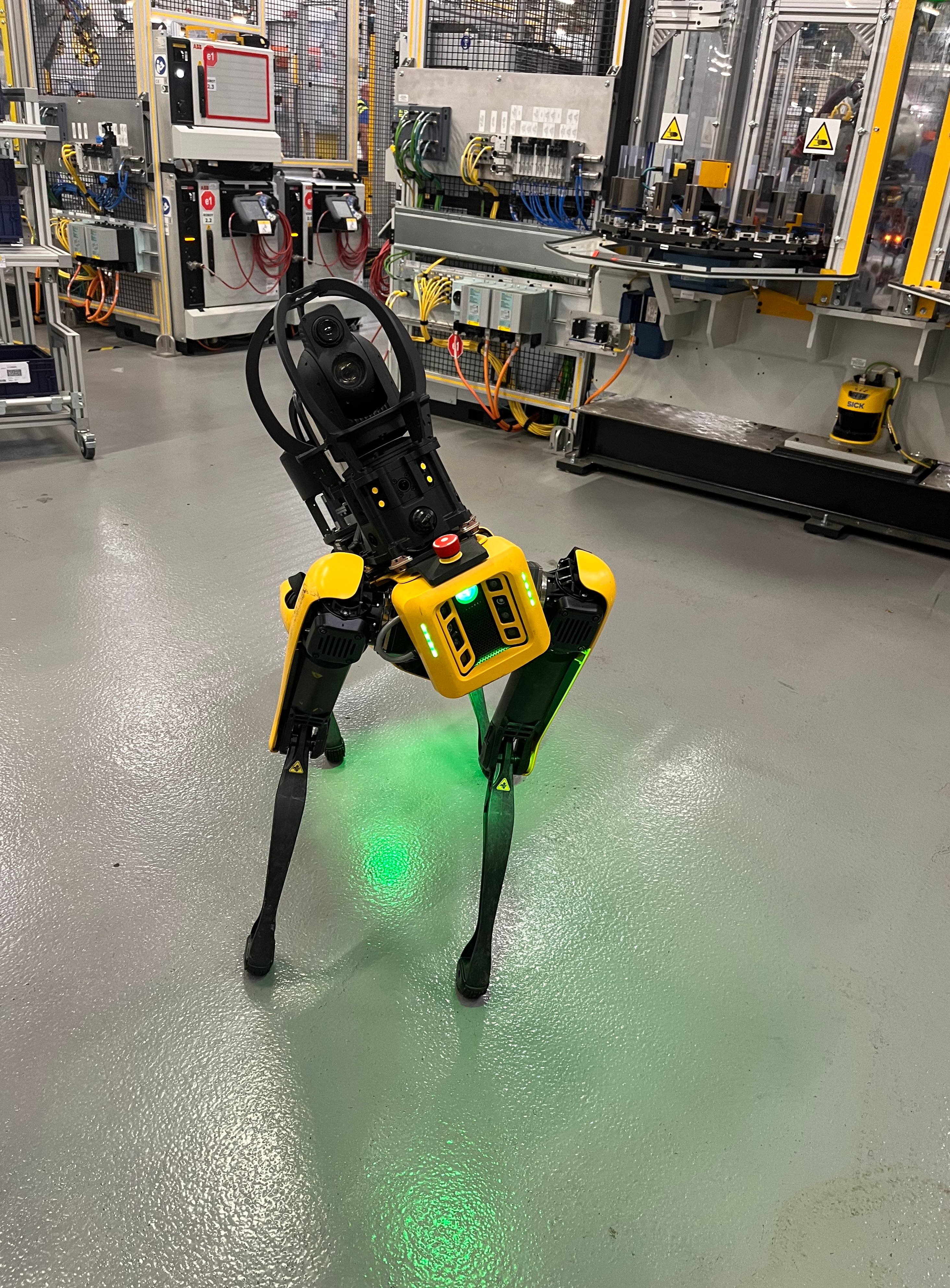
The main job for Spot® (the official name from Boston Dynamics) is to help us prevent and predict any failure in equipment and avoid costly downtime. It uses thermal cameras that can detect heat changes and microphones that can listen for air leaks.
For example, if it detects part of the machinery reaching temperatures at the top end of the baseline we set, it can alert us, and we can look at replacing a part before it fails. We can also use the data it gathers to observe trends and look into things before they become an issue.
Obviously, one of the interesting parts for other people is that Spot® has to walk around the plant. It uses Lidar — the same kind of technology used in autonomous vehicles — which sends out laser pulses to map the plant and figure out its route. Part of the trial is how it interacts with the other robots that move around the plant, as well as people working on the floor, but it’s good at navigating. People have the right of way, and it’ll stop if someone comes within a two-metre boundary, too. So far we’ve had zero issues.
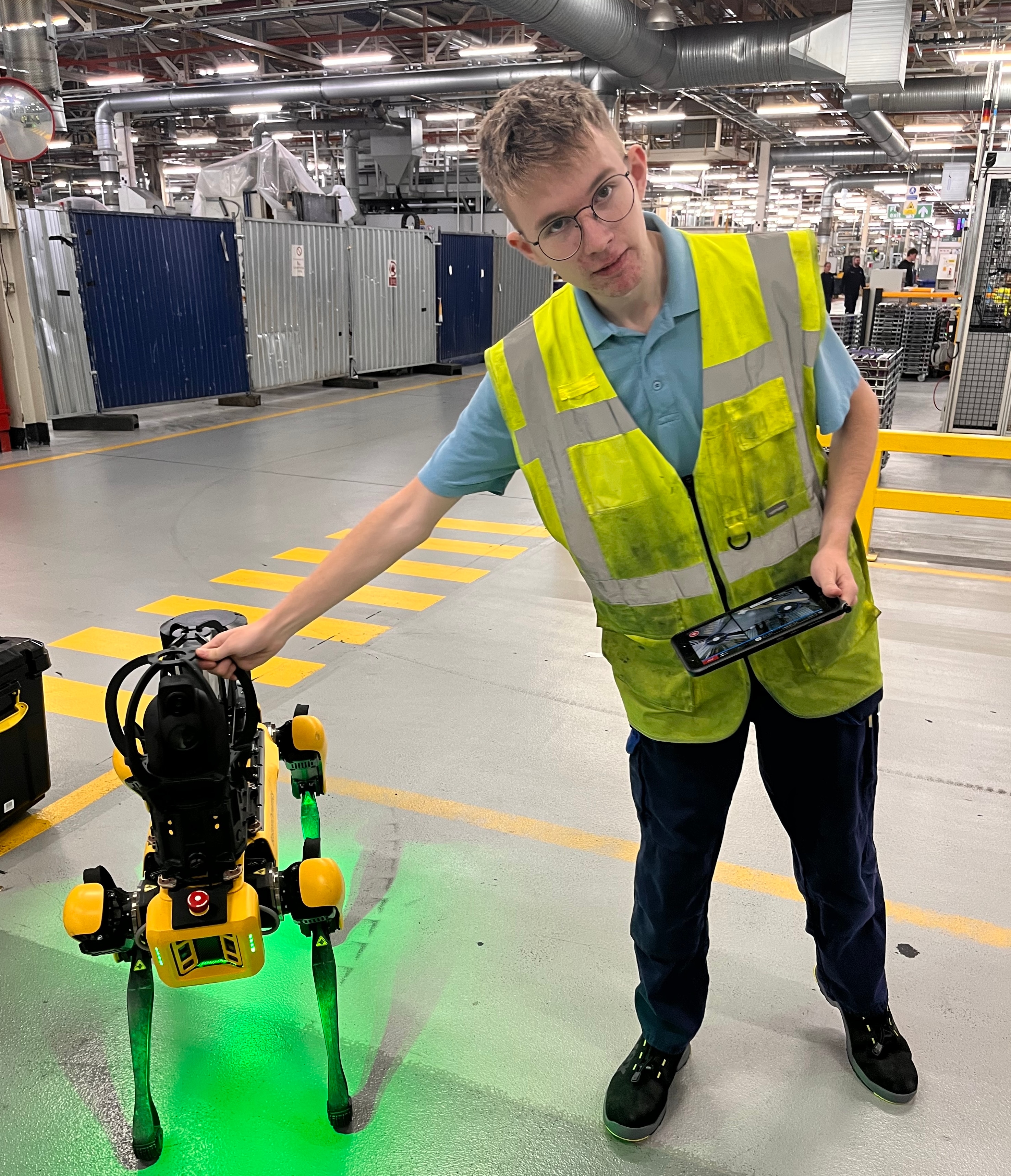
“If you’d told me then that I’d be working as an apprentice at Ford today and one of my main roles was to be a robot dog handler, I’d have thought you were joking.”Joe Armbruster, robot dog handler
Breaking the ice
I remember taking Spot® out for the first time for it to learn the plant. It was definitely a weird one. Being new there myself, it was the perfect icebreaker with my new colleagues, and everyone was intrigued. But the reaction is very much a spectrum. Some people are terrified, others think it’s cute — you can tell they want to pat it. And you’d be surprised just how many jokes people can make about it. That said, I’ve been told to make sure I’ve got a big enough poop bag more times than I can recall.
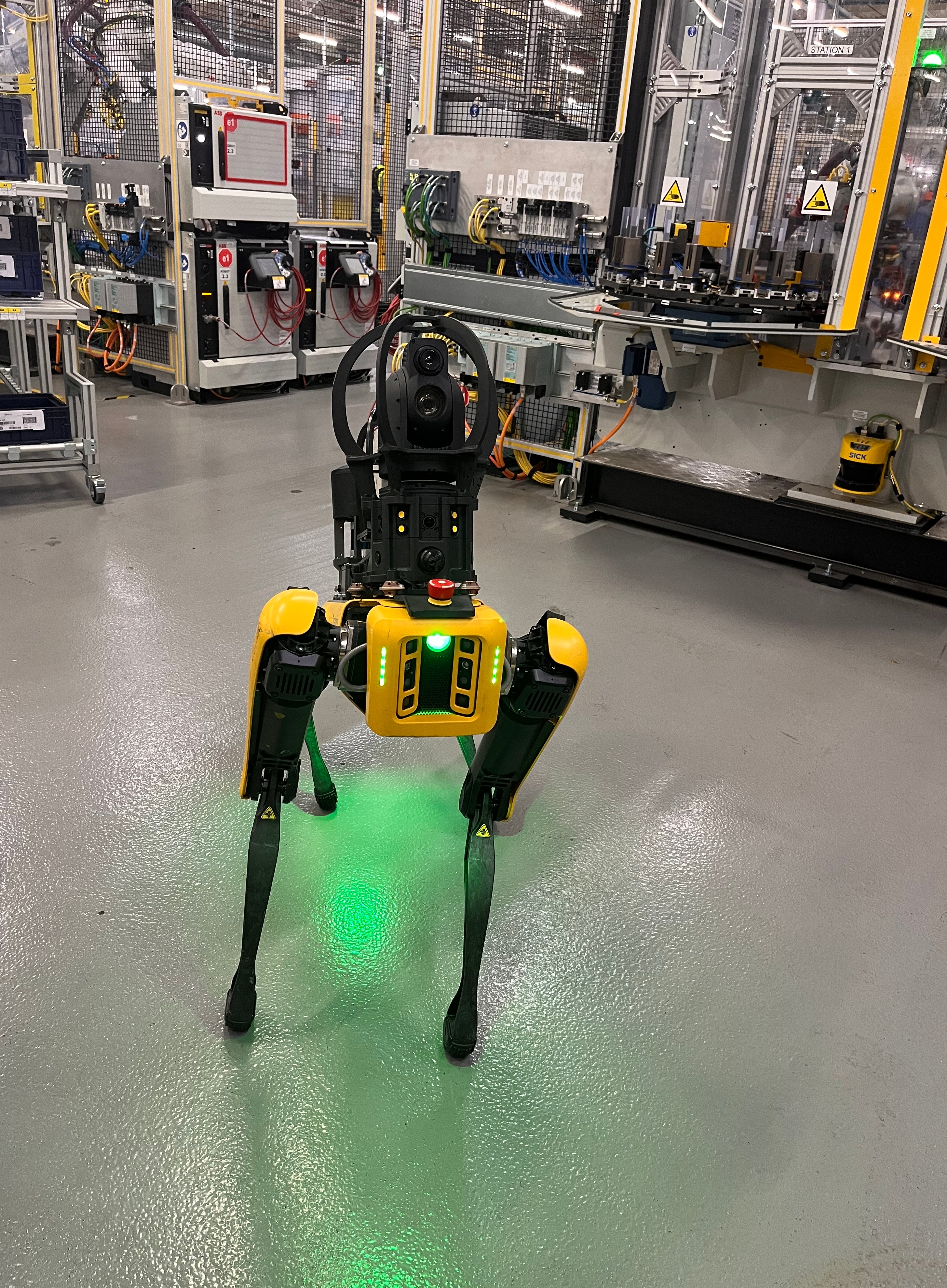
They’ve even given it a nickname. There’s an emergency stop button at the back of it, but we modified it to fit another at the front with a red light. Someone said it looked like Rudolph the reindeer, so ‘Rudolph’ has kind of stuck.
Even though it’s a robot, there’s definitely an aspect of it kind of having a personality, a bit like cars, where you get all these little quirks that give it some character. Sometimes I even find myself referring to it as a ‘he’. It can feel a bit like having my own pet at work… and it’s definitely mine. I think everyone in the plant knows me as the guy with the robot dog now.
Low maintenance, high potential
Fortunately, I don’t think it needs as much looking after as a real dog; just changing the rubber pads on its feet sometimes and cleaning out the dust from the battery’s cooling motors. It’s actually very low maintenance. It takes itself out on a walk and can do that for 1.5 hours on a charge, then comes back and charges itself. It’s got a docking station where it lays down and connects with ports on its underside. It does kind of look like a dog laying down in its basket when it does that.
I’m not sure I’d have it as a pet, though. I actually used to have two dogs, a Bichon Frise and a labradoodle, which were both hypoallergenic because my dad’s allergic to dog hair. He’d be fine with this, but I don’t think he’d enjoy the noise. You don’t really notice it in the plant, but the cooling fans are pretty loud if you don’t have that background noise.
As for the future of Spot®, it’s still on trial, but it’s looking promising. We’re even examining two other use cases for it that could save further costs. And it could do those as well as its existing role.
A glimpse into the future of work
For me, it’s a great role, and I’m constantly learning; it’s like a new dog teaching me new tricks. We’re introducing more cobots all the time — which are robots that can work alongside people rather than being siloed away behind safety barriers — so what I’m learning with Spot® is great for that.
Even at home, I’m always trying to learn more about niche things, like the Programmable Logic Controller (PLC) that Spot® uses, so it’s a perfect job, even if telling people about it gets some strange looks. But I wouldn't trade this high-tech, four-legged companion for any other colleague — though a robot that brings me coffee would be a close second.
Joe Armbruster is a second year Ford apprentice and robot dog handler
